
-
admin
- July 20, 2026
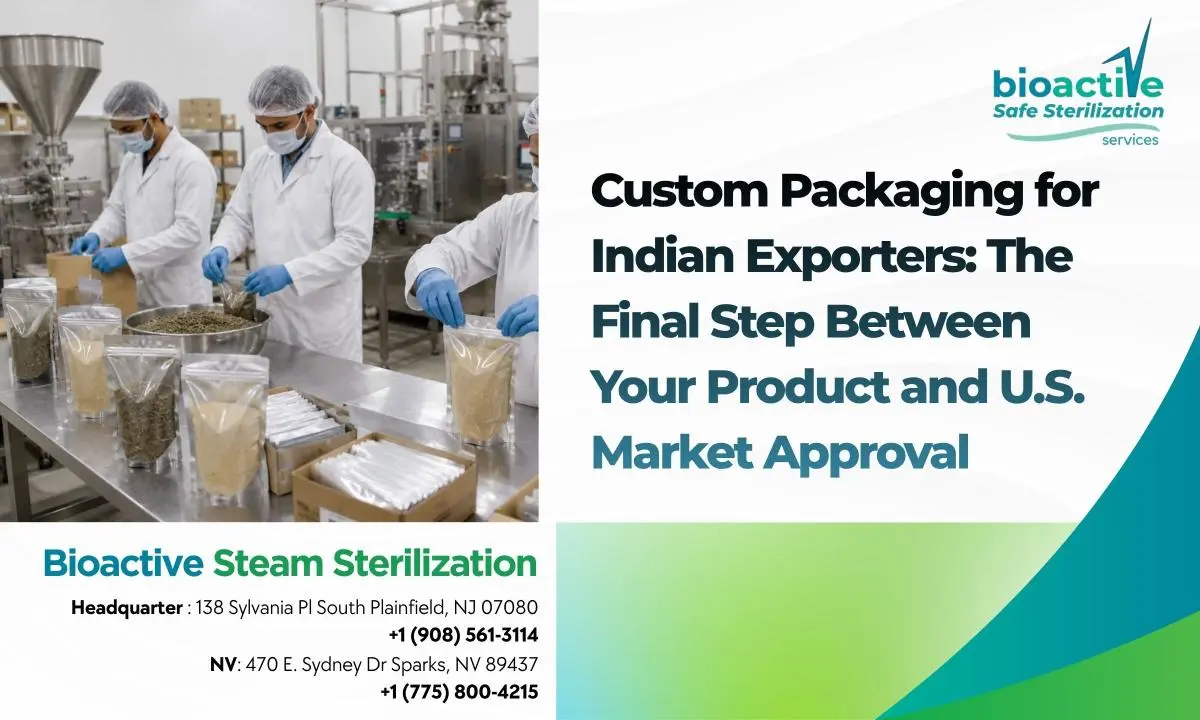
Custom Packaging for Indian Exporters: The Final Step Between Your Product and U.S. Market Approval
Indian exporters of spices, herbs, and nutraceutical powders have spent years perfecting cultivation, processing, and quality control back home. But one stage often gets underestimated until a shipment is delayed or rejected at a U.S. port: packaging. Custom packaging for Indian exporters isn’t just about putting a finished ingredient into a bag or drum — it’s the last checkpoint that determines whether a product retains its safety, freshness, and compliance status once it reaches an American buyer’s warehouse.
This guide breaks down why custom, export-ready packaging matters, what U.S. buyers expect, and how the right packaging solutions for Indian ingredient exporters can prevent costly rejections, contamination risks, and compliance gaps.
Why Packaging Is a Compliance Issue, Not Just a Logistics One
Many exporters treat packaging as a downstream, almost cosmetic step. In reality, U.S. regulators and buyers view it as part of food safety itself. Once a spice, herb, or nutraceutical powder has been steam sterilized to reduce pathogens, the packaging step is what locks in that safety margin. Poor packaging — wrong barrier materials, inconsistent sealing, non-compliant labeling — can reintroduce moisture, contamination, or handling damage that undoes the sterilization work entirely.
For India-origin ingredients entering the U.S. supply chain, packaging needs to satisfy three things simultaneously:
- Regulatory compliance with FDA, GMP, and FSMA/FSVP expectations for labeling, traceability, and food-contact materials
- Physical protection during long-haul ocean freight, customs handling, and domestic redistribution
- Buyer-ready formats that match how U.S. brands and manufacturers actually use the ingredient (bulk drums, sacks, pouches, or jars)
What Custom Packaging for Indian Exporters Should Include
Because Indian ingredient exports span such a wide range of products — turmeric and chili powders, ashwagandha and moringa, herbal extracts, functional food powders — there’s no single packaging format that fits every shipment. Custom packaging means matching the format, barrier properties, and container size to the specific ingredient, its moisture sensitivity, and the buyer’s downstream use.
Common export-ready packaging formats
- Bulk sacks and drums (typically 15 kg to 500 kg) for manufacturers who will reprocess or reblend the ingredient
- Jar filling for retail-adjacent or smaller-batch nutraceutical and spice products
- Pouch packaging with moisture and oxygen barriers for shelf-stable powders
- Regulatory-compliant labeling covering origin, lot traceability, allergen declarations, and net weight in U.S.-required formats
Choosing the right combination isn’t guesswork — it depends on the ingredient’s sensitivity to humidity and light, the buyer’s minimum order quantities, and how the product will move through the next stage of the U.S. supply chain.
Packaging Services for Steam-Sterilized Powders
Steam sterilization is the industry’s preferred kill-step for spices, herbs, and nutraceutical powders because it reduces pathogen load without chemicals or irradiation, while preserving aroma, color, and bioactivity. But that protection only holds if the packaging services for steam-sterilized powders that follow are handled correctly and immediately after processing.
A sterilized powder that sits exposed to ambient humidity, or gets packed into containers with inadequate moisture barriers, can reabsorb contamination risk before it ever reaches a U.S. distribution center. That’s why sterilization and packaging are best handled as a connected process rather than two separate vendors — ideally within the same facility, so there’s no gap between kill-step validation and final containment.
Key elements of proper post-sterilization packaging include:
- Immediate transfer from sterilization to a controlled packaging environment to avoid recontamination
- Metal detection and final inline checks before sealing
- Moisture-appropriate packaging materials matched to the powder’s hygroscopic properties
- Batch-level traceability tying the packaged unit back to its sterilization certificate
About Bioactive Safe Sterilization and Its Steam Sterilization Process
Bioactive Safe Sterile or Steam Sterilization is a USA-based processing partner for Indian exporters, operating facilities in New Jersey and Nevada that combine steam sterilization with toll blending, milling, and packaging under one roof. For Indian exporters, this matters because it removes the handoff risk that comes from using separate vendors for sterilization and packaging.
The core of the operation is a validated steam sterilization process that delivers greater than 5-log pathogen reduction, third-party verified through independent testing. Unlike chemical fumigation or irradiation, steam sterilization uses heat and steam with flash-cooling steps to achieve pathogen containment — targeting Salmonella, E. coli, yeast, and mold — while preserving the ingredient’s natural aroma, color, texture, and nutritional integrity.
Because the process is fully FDA GMP and FSMA/FSVP compliant, and kosher, organic, and low-allergen friendly, it’s built specifically for the standards U.S. buyers expect from India-origin spices, herbs, and nutraceutical ingredients. Once sterilization is complete, the same facility moves the product directly into packaging — jar filling, pouch packaging, or export-ready bulk formats from 15 kg to 500 kg — so there’s no gap between kill-step validation and final containment.
For Indian exporters, this connected model means one facility, one set of batch records, and one point of accountability from steam sterilization through to the packaged, buyer-ready product.
Packaging Solutions for Indian Ingredient Exporters: What U.S. Buyers Actually Look For
U.S. importers and brands evaluating Indian suppliers are increasingly asking not just “was this sterilized?” but “how was it packaged, and can you prove it?” Buyer due diligence now commonly includes:
- Confirmation that packaging materials are food-contact safe and compliant with U.S. regulations
- Evidence of consistent batch-to-batch packaging protocols
- Proof that packaging happened in a facility with GMP, HACCP, or SQF-aligned controls
- Formats that match their existing receiving and handling equipment (drum sizes, sack weights, pallet configurations)
Indian exporters who can offer packaging solutions for Indian ingredient exporters that check all four boxes typically see faster buyer approval cycles and fewer requests for re-documentation or re-testing.
Why U.S.-Based Packaging Makes Sense for India-to-USA Exports
A growing number of Indian exporters are shifting final packaging to a U.S.-based partner rather than packaging entirely in India before shipment. This approach has a few practical advantages:
- Reduced transit damage risk — bulk shipments can move in larger, more freight-efficient formats, with final retail or buyer-specific packaging done closer to the point of use
- Faster compliance turnaround — labeling and packaging can be adjusted to match evolving U.S. requirements without needing to restart the export process from India
- Combined processing — sterilization, milling, blending, and packaging can happen in one continuous workflow at a U.S. facility, minimizing handling gaps
This model is exactly why Bioactive Safe Sterile or Steam Sterilization operates as a toll processing and packaging partner for Indian exporters, offering jar filling, pouch packaging, and export-ready bulk formats from 15 kg to 500 kg, alongside steam sterilization, milling, and blending under one roof. You can see the full scope of services on the India Exporters page.
A Quick Checklist for Indian Exporters Evaluating Packaging Partners
Before finalizing a packaging partner for U.S.-bound shipments, it’s worth confirming:
- Does the facility offer both sterilization and packaging, or will the product change hands between vendors?
- Are packaging formats flexible enough to match different buyer requirements (bulk vs. retail-adjacent)?
- Is labeling reviewed for U.S. regulatory compliance before shipment leaves the facility?
- Can the partner provide batch-level documentation linking sterilization and packaging records?
- What is the facility’s certification profile (GMP, HACCP, SQF, USDA Organic)?
Frequently Asked Questions
What is custom packaging for Indian exporters?
Custom packaging for Indian exporters refers to tailoring container format, barrier material, and labeling to a specific ingredient and buyer requirement, rather than using a one-size-fits-all format. It typically includes bulk sacks, drums, jars, or pouches sized between 15 kg and 500 kg, with U.S.-compliant labeling.
Why does packaging matter after steam sterilization?
Packaging is what preserves the pathogen reduction achieved during steam sterilization. If a sterilized powder isn’t packaged promptly in appropriate moisture- and contamination-resistant materials, it can lose the safety benefit of the sterilization step before it reaches the buyer.
Do U.S. buyers require specific packaging formats from Indian exporters?
Requirements vary by buyer, but most U.S. manufacturers and brands expect food-contact-safe materials, accurate lot traceability, and formats that match their receiving equipment — commonly bulk drums or sacks for reprocessing, or pouches and jars for smaller-batch use.
Is it better to package in India or in the USA before distribution?
Many exporters now ship in larger bulk formats and complete final packaging at a U.S.-based facility. This reduces transit damage risk, allows faster adjustments to labeling for compliance, and keeps sterilization and packaging connected in one workflow.
Who provides packaging services for steam-sterilized powders in the USA?
Bioactive Safe Sterile or Steam Sterilization provides combined steam sterilization and packaging services for Indian exporters, including jar filling, pouch packaging, and export-ready bulk formats, with regulatory-compliant labeling handled at its U.S. facilities.
The Bottom Line
Packaging is often the difference between a shipment that clears U.S. buyer inspection smoothly and one that gets flagged for rework. For Indian exporters of spices, herbs, and nutraceutical ingredients, investing in custom packaging for Indian exporters that’s matched to the product, compliant with U.S. labeling rules, and connected directly to the sterilization process isn’t an added cost — it’s what protects the value of everything done earlier in the supply chain.
Looking for a USA-based partner that combines steam sterilization with export-ready packaging? Contact Bioactive Safe Sterile or Steam Sterilization to discuss packaging formats and compliance requirements for your next shipment.