
-
admin
- June 17, 2026
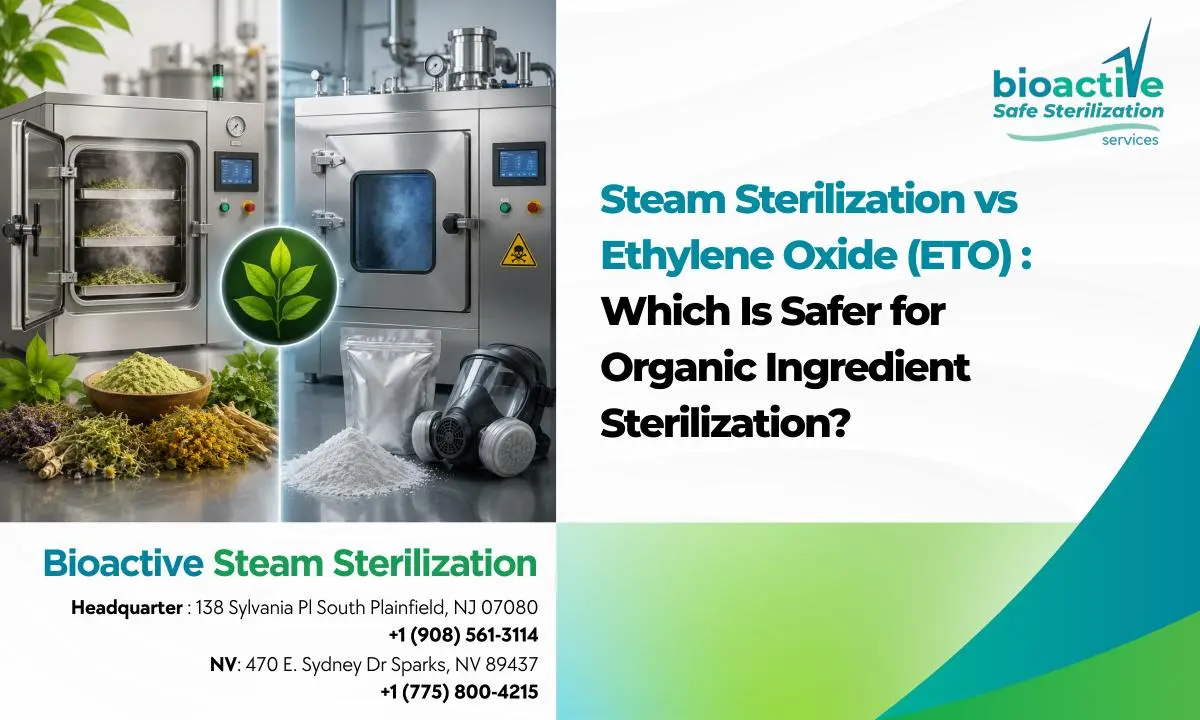
Steam Sterilization vs Ethylene Oxide (ETO): Which Is Safer for Organic Ingredient Sterilization?
When comparing steam sterilization and ethylene oxide (ETO) for organic ingredient sterilization, steam sterilization is generally considered the safer and more natural option. It effectively reduces microbial contamination without leaving harmful chemical residues, making it suitable for organic herbs, spices, and nutraceutical ingredients. Ethylene oxide, while effective in sterilization, has raised concerns regarding residual chemicals, regulatory restrictions, and consumer safety.
Introduction
Ensuring microbial safety is one of the biggest challenges for manufacturers of organic ingredients, dietary supplements, herbal products, and nutraceutical formulations. Contaminated raw materials can contain harmful microorganisms such as Salmonella, E. coli, yeast, mold, and other pathogens that may compromise product quality and consumer safety.
To address these risks, manufacturers often use sterilization methods before ingredients enter production. Two commonly discussed methods are steam sterilization and ethylene oxide (ETO) treatment.
But which option is safer for organic ingredient sterilization?
This guide compares both technologies, their advantages, limitations, and suitability for organic ingredients.
What Is Organic Ingredient Sterilization?
Organic ingredient sterilization refers to the process of reducing microbial contamination in organic raw materials while maintaining their quality, functionality, and compliance with industry standards.
The process is commonly used for:
- Organic herbs
- Functional food ingredients
- Nutraceutical powders
- Dietary supplement ingredients
- Spices and seasonings
The primary goal is to improve product safety while preserving ingredient integrity.
What Is Steam Sterilization?
Steam sterilization is a thermal microbial reduction process that uses controlled heat and steam to reduce harmful microorganisms present in ingredients.
The process typically involves:
- Controlled steam exposure
- Microbial reduction
- Moisture control
- Product cooling
- Quality verification
Because steam sterilization uses water vapor instead of chemical agents, it is widely accepted as a clean-label processing method.
Key Benefits of Steam Sterilization
- Chemical-free process
- Effective microbial reduction
- No harmful residue concerns
- Suitable for organic ingredients
- Preserves product quality
- Supports clean-label manufacturing
- Environmentally friendly processing
What Is Ethylene Oxide (ETO) Sterilization?
Ethylene oxide sterilization is a chemical sterilization process that uses ethylene oxide gas to eliminate microorganisms.
ETO has historically been used for:
- Medical devices
- Pharmaceutical products
- Heat-sensitive materials
- Certain food ingredients
The gas penetrates materials effectively and can sterilize products at relatively low temperatures.
However, growing concerns about residual chemicals and regulatory scrutiny have increased interest in alternative sterilization methods.
Steam Sterilization vs ETO: Key Differences
1. Sterilization Method
Steam Sterilization
- Uses heat and steam
- Physical microbial reduction process
- No synthetic chemical treatment
ETO Sterilization
- Uses ethylene oxide gas
- Chemical sterilization process
- Requires aeration to reduce residues
2. Residue Concerns
One of the biggest differences involves residual chemicals.
Steam sterilization does not introduce chemical sterilants into ingredients.
ETO sterilization may leave residual compounds that require monitoring and compliance testing.
For brands focused on clean-label products, this distinction is significant.
3. Organic Product Compatibility
Steam sterilization is often preferred for organic ingredient sterilization because it aligns with natural processing expectations and consumer preferences.
Manufacturers producing organic supplements, herbal products frequently seek sterilization methods that minimize chemical exposure.
4. Consumer Perception
Today’s consumers increasingly evaluate ingredient sourcing and processing methods.
Products processed using chemical-free technologies often align better with consumer expectations regarding:
- Natural ingredients
- Clean labels
- Transparency
- Sustainability
5. Environmental Impact
Steam sterilization primarily relies on water and heat.
ETO sterilization requires specialized handling, safety controls, and emissions management due to the nature of the gas involved.
Why Many Nutraceutical Companies Prefer Steam Sterilization
The nutraceutical industry has seen growing demand for minimally processed ingredients that maintain safety without compromising product integrity.
Steam sterilization helps manufacturers:
- Meet microbial safety standards
- Reduce contamination risks
- Support clean-label positioning
- Improve consumer confidence
- Maintain ingredient quality
- Process organic raw materials effectively
As a result, many manufacturers view steam sterilization as a practical solution for organic ingredient sterilization.
Is Steam Sterilization Safe for Organic Herbs?
Yes. Steam sterilization is commonly used for organic herbs, spices when performed under carefully controlled conditions.
The process is designed to:
- Reduce microbial loads
- Protect ingredient functionality
- Preserve product characteristics
- Improve manufacturing safety
Processing parameters can be adjusted based on ingredient type and microbial requirements.
Frequently Asked Questions
Is steam sterilization better than ETO for organic ingredients?
For many organic ingredient applications, steam sterilization is preferred because it does not rely on chemical sterilants and supports clean-label manufacturing goals.
Does steam sterilization leave chemical residues?
No. Steam sterilization uses water vapor and heat rather than chemical sterilization agents.
Why are manufacturers looking for ETO alternatives?
Many manufacturers seek ETO alternatives due to increasing regulatory scrutiny, residue concerns, and growing consumer demand for natural processing methods.
Can steam sterilization reduce Salmonella and other pathogens?
Steam sterilization is widely used to reduce microbial contamination, including harmful microorganisms commonly found in herbs, spices, and nutraceutical ingredients.
Is steam sterilization suitable for nutraceutical ingredients?
Yes. Steam sterilization is commonly used in nutraceutical manufacturing to improve ingredient safety and quality.
Conclusion
When evaluating options for organic ingredient sterilization, steam sterilization offers significant advantages for manufacturers seeking a clean, effective, and chemical-free microbial reduction solution.
Compared with ethylene oxide sterilization, steam sterilization provides a process that aligns with modern clean-label expectations, supports organic ingredient processing, and helps manufacturers maintain high safety standards without introducing chemical sterilants.
As consumer demand for transparency, natural ingredients, and product safety continues to grow, steam sterilization remains one of the most trusted solutions for organic herbs, spices, and nutraceutical ingredients.